Warehouse and hall thermal survey
Dock doors, sectional doors, ridge, panel joints, wet roof insulation, column bases: where the hall heats the outdoors.
Roof and solar
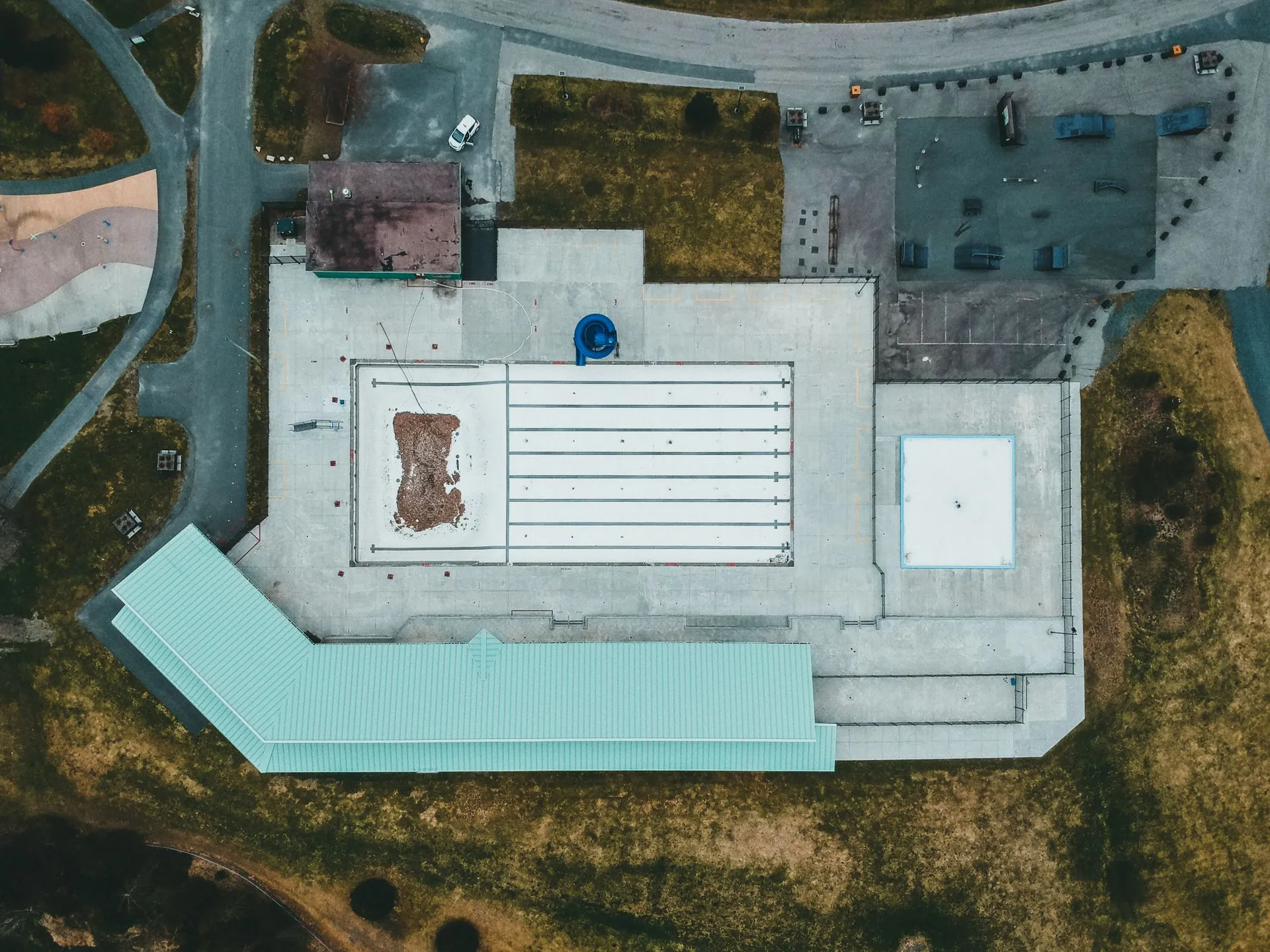
We walk the roof with a drone, without opening anything: on flat roofs we look for wet insulation, on solar arrays for hot cells. Wherever airspace and permits allow.
01 / Two tasks
Same method, but each needs a different time, different weather and a different mindset.
At the end you receive a thermal orthomosaic and a coordinate-referenced defect map with recommended checks. The drone survey can be ordered alone or added to a hall survey, in which case travel and processing are shared: warehouse and hall.
02 / Flat roofs
The physics is simple: water stores a lot of heat, so a wet section cools later.
By day a flat roof absorbs the sun’s heat. After sunset the surface of dry insulation cools quickly. A soaked section has a higher heat capacity and conductivity, so it holds the heat longer. For a while, within the measurement window, the wet area shows as a warmer patch on the cooling roof.
The window is narrow and has conditions: strong sun the day before, a dry roof surface, light wind, no precipitation. Ballast gravel, flashing, roof plant and puddles can also cause patches, so we read the thermal image together with the visual image and the roof drawing.
The stake: a small wet area means a lot. In the example warehouse 35 m² of wet insulation is about 75 W/K of extra loss (roughly HUF 190,000 per season), with an indicative repair of about HUF 770,000: worked through on the heat loss analysis page.
03 / Solar
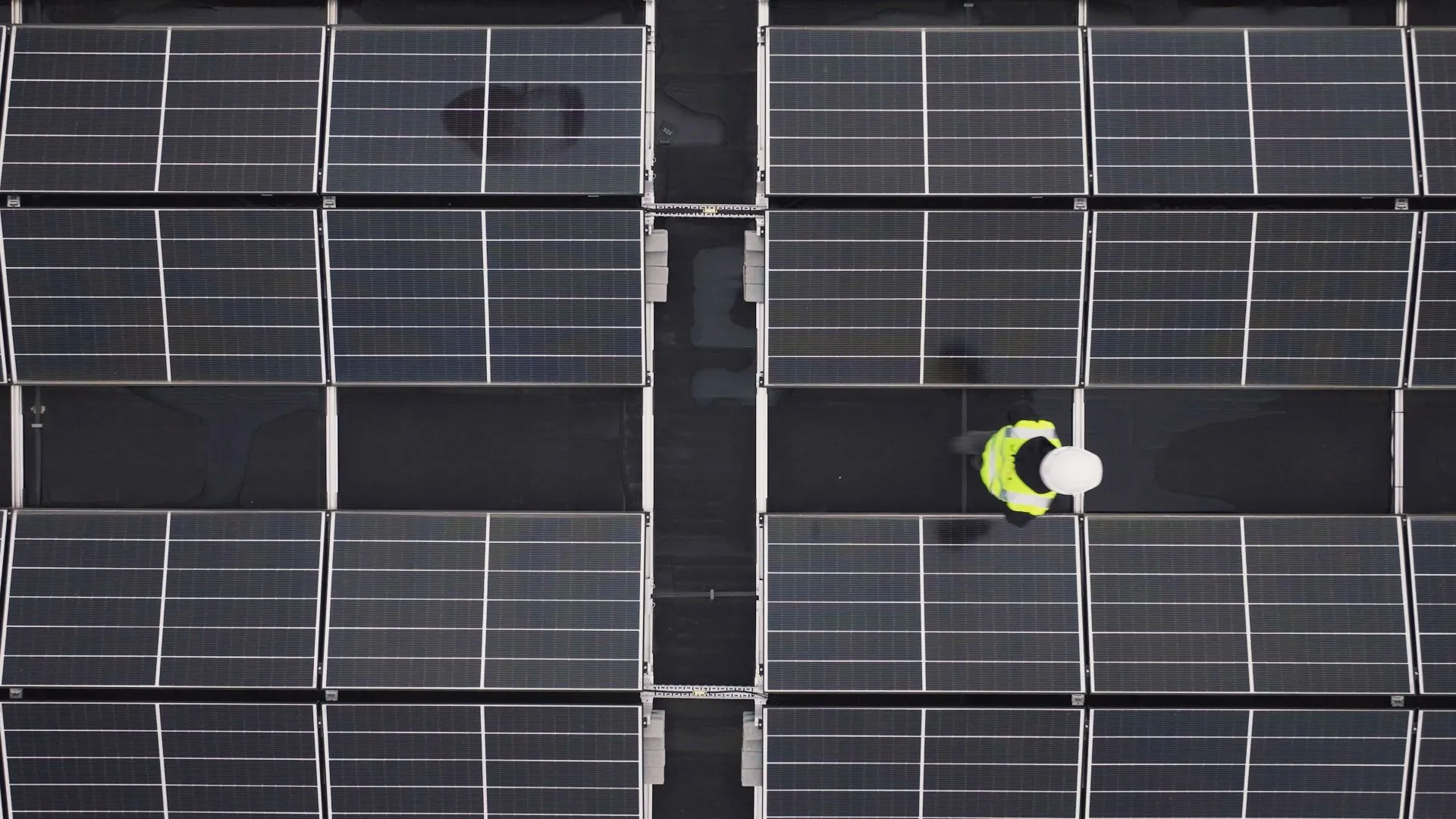
A faulty cell is warmer than its neighbours because it turns sunlight into heat instead of current.
A cracked, soiled or partly shaded cell that heats up because of the string current.
One third of the module is permanently warmer or cooler than the other two.
A faulty or loose connector at the end of a module or string.
Bird droppings, leaves, a chimney’s shadow: the image flags it, cleaning or trimming fixes it.
We measure in strong, steady sunshine with the plant running. The image gives the location of a fault; we do not estimate lost production because that needs a current–voltage measurement. Repair and warranty are for the installer and the manufacturer.
04 / Airspace and permits
Drone flights are regulated. That is why the drone item is always conditional.
05 / Sample image
An openly licensed sample of an industrial area; the orthomosaic in your report is similar, complemented by a coordinate-referenced defect map.
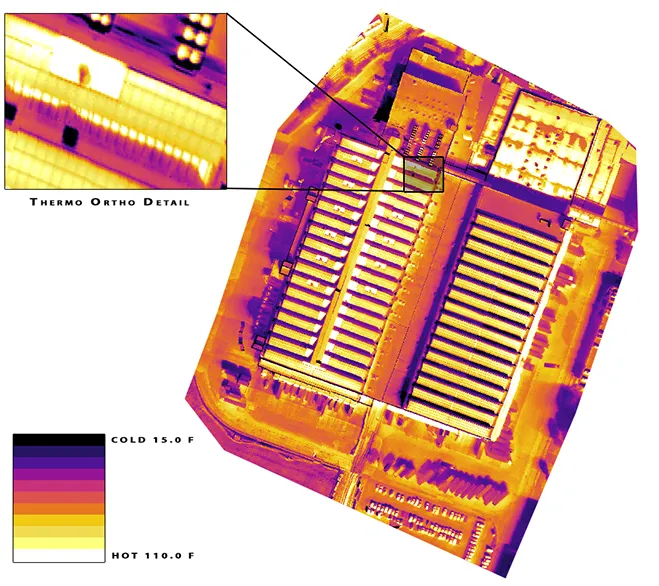
A thermal orthomosaic shows the whole roof in one geometrically aligned image, so a patch can be located to within a metre and the same view can be reused when re-measuring after repairs.
Besides the thermal orthomosaic the report holds a visual orthomosaic, a coordinate list of suspect areas and recommended checks. We give no opinion on the roof’s structure, load capacity or watertightness.
06 / FAQ
Related
Dock doors, sectional doors, ridge, panel joints, wet roof insulation, column bases: where the hall heats the outdoors.
Watts, kWh, m³ of gas, forints: with ranges, an A/B/C order and payback. This is what turns images into a decision.
Hot joints and terminals under load, with your authorised electrician present. Not a safety inspection.
Tell us briefly how big and what kind of building it is and what worries you. We reply within one working day and say which package fits. Requesting a quote commits you to nothing.