Winery · cellar

Stable cellar temperature, lower cooling cost

In a winery the direction of heat is reversed: a gap, an uninsulated pipe or a ventilator left open costs you cooling energy, not heating. A thermal camera shows where warmth seeps into the cellar, the fermentation room and the bottle store, and what to put right first.
  • Cooled spaces can be surveyed in summer
  • Cellar module: HUF 45,000 + VAT per room
  • Quick diagnostic HUF 135,000 + VAT
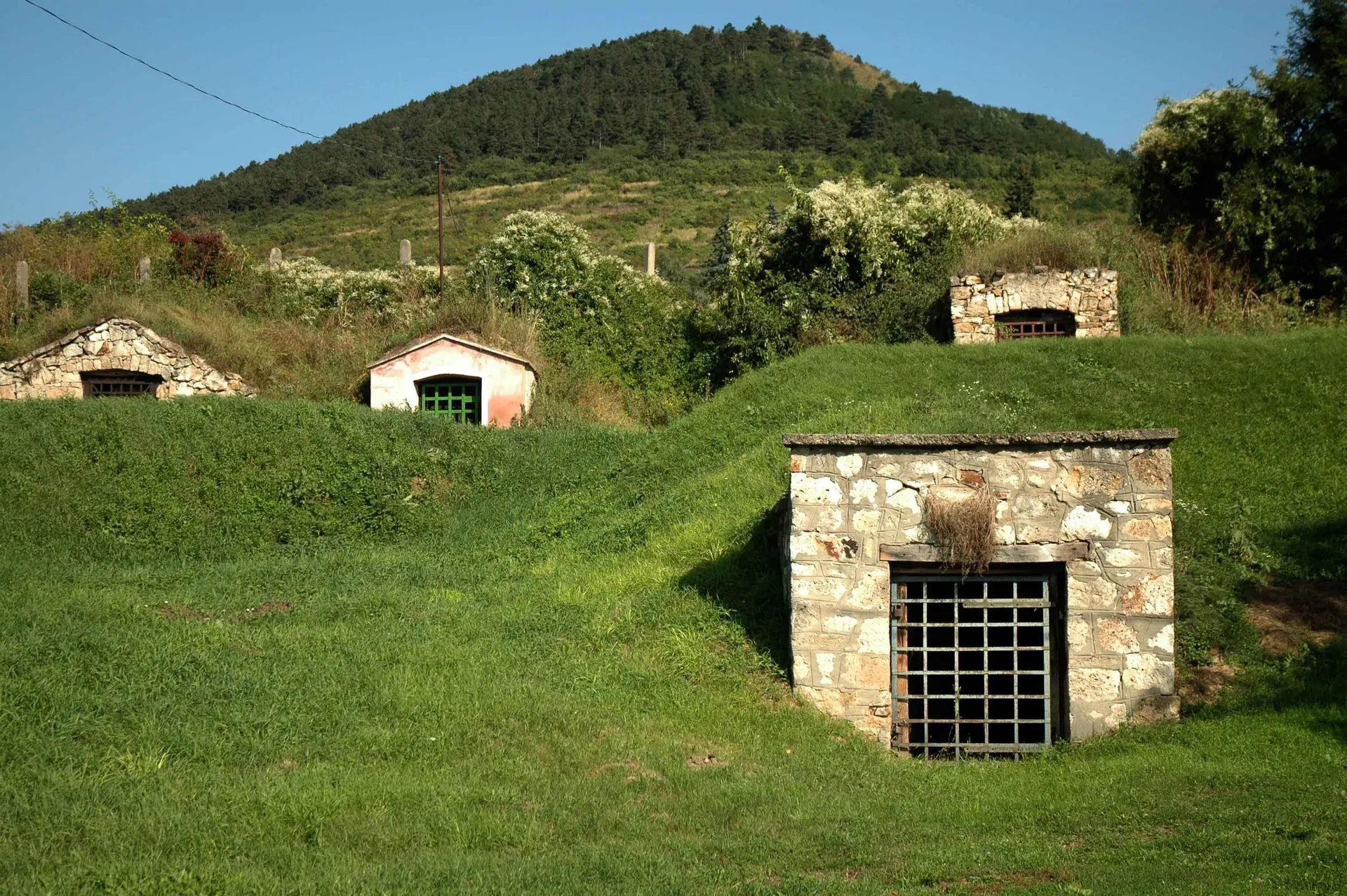
Hillside wine cellar entrances in Tokaj
Illustration: cellar entrances in Tokaj, not a client photo Image: MyName (Wikimedia Commons) / CC BY-SA 3.0

01 / The situation

What matters in a winery?

  • 01

    Constant cellar temperature

    A cellar's value is its stable temperature. A badly closing door, vent or lighting opening undermines it, and cooling or humidity control has to work harder.

  • 02

    Fermentation and tank cooling

    In the fermentation room, poor insulation on tank cooling jackets and glycol lines shows directly in the chiller's running time.

  • 03

    Production hall, bottling, press house

    The modern part of a winery is often a simple panel hall: doors, roof, panel joints. The same defects occur there as in any hall.

02 / What we typically find

What we typically find

Typical items in this type of facility. Which of them exist in your building is what the survey shows: we do not promise defects.

  • Cellar doors, openings, vents

    Gaps, or openings left ajar or badly closing, where outside warmth flows in.

  • Damp or bridged wall sections

    Wet surfaces, cooler or warmer than their surroundings, on cellar walls and vaults.

  • Fermentation and tank cooling

    Uninsulated glycol pipe, incomplete jacket insulation, valves on the cooling loop.

  • Chiller, condenser

    Thermal condition of the plant room, condenser and pipework.

  • Bottling and production hall

    Doors, panel joints, roof, where the hall envelope is also heated.

  • Electrical cabinets

    Screening of chiller, pump and bottling-line cabinets under load.

03 / Worked example

What can an item like this be worth? Example, October 2026 prices

Example, October 2026 prices Estimate

The example: Workshop / small production hall. 40 x 25 m, 7 m high, 18 C, gas warm-air heaters, 1 roller door (4.0 x 4.5 m) + 1 sectional door (3.5 x 3.5 m), process extraction. Medium case: Both door seals poor, 25 m of wall-panel joint, 30 m2 wet roof, 30 m eaves thermal bridge.

Estimated loss per season, medium case
420,000 HUF
Estimate range: HUF 330,000–590,000
Cost of fixing all items
1,300,000 HUF
Estimate band: HUF 720,000–2,500,000
Payback if only the quick (A) items are fixed
12 mo
Estimate 3 items, ≈HUF 230,000/season saved
Survey price at the pilot rate, + VAT
135,000 HUF
list price: HUF 190,000
Defect cost per season at three levels HUF/season Estimate
  • Localised defects ≈ HUF 99,000

    2 items

  • Medium cluster ≈ HUF 420,000

    5 items

  • Widespread defects ≈ HUF 1,300,000

    6 items

Prio.ItemLossFixPayback
A Roller door: perimeter seals (13 m x 10 mm) ≈ HUF 65,000/season ≈ HUF 30,000 ≈6 mo
A Wall-panel joints (25 m x 2 mm) ≈ HUF 120,000/season ≈ HUF 110,000 ≈11 mo
A Sectional door: perimeter seals (13 m x 8 mm) ≈ HUF 50,000/season ≈ HUF 90,000 ≈22 mo
B Wet roof insulation (30 m2) ≈ HUF 170,000/season ≈ HUF 660,000 ≈48 mo

Heating cost of the fault-free baseline: ≈ HUF 5,300,000/season; the defects of the medium case add 7.3%.

Energy price basis: Hungarian business gas, net, 9 October 2026: central 40.4 Ft/kWh, range 32.1–56.9 Ft/kWh. The forward curve implies lower prices in the following years.

Estimate – not a guarantee. Figures are model-based and actual values may differ.

04 / Pilot offer

For the first 10 facilities: pilot prices for the 2026/27 heating season

Quick diagnostic

HUF 135,000 + VAT

list price: HUF 190,000 and up + VAT

  • Exterior and interior thermal imaging
  • Annotated thermal image catalogue
  • A–B–C findings list with HUF/season estimates
  • 10–15 page PDF, 45-minute walkthrough

3D package

HUF 275,000 + VAT

list price: HUF 390,000 and up + VAT

  • Everything in the Quick diagnostic
  • Interactive 3D heat map in your browser
  • Loss breakdown per building element
  • Action plan with payback, 60-minute meeting

Limited to the first 10 facilities. Quick diagnostic up to 2,000 m², 3D package up to 2,500 m²; travel within 80 km (free up to 40 km). Orders by 31 January 2027, surveys by 31 March 2027, weather permitting.

Our recommendation

What fits a winery?

For a smaller winery the Quick diagnostic with the cellar module is enough: a few rooms per cellar, the production area and the cooling. If the production part is larger or consists of several buildings, the 3D package adds the spatial picture.

  • Cellar / cold-room module: HUF 45,000 + VAT per room, up to 300 m²
  • Electrical cabinet screening: HUF 12,000 per cabinet with a package

What we ask in return

  • Written consent to an anonymised case study (sector, size band, region; no name, logo or address). You approve the final text.
  • A 30-minute feedback interview, and a follow-up call after six months on which fixes were done.

Same scope and quality as a list-price order. The price does not depend on what you say in the feedback.

05 / How it works

Three steps from quote to fix list

  1. Step 1: Briefing and quote

    We ask about size, heating or cooling system and energy price. You get a fixed written quote.

    1 working day

  2. Step 2: Night-time survey

    Cooled spaces can be surveyed in summer, before or after harvest, when the outside–inside temperature difference is large. The exterior survey of the production part is done at night in the heating season.

    on site

  3. Step 3: Report and walkthrough

    PDF report: for each item the location, likely cause, estimated loss with a range, fix suggestion and priority. Raw files and a walkthrough.

    10 working days

06 / Common questions

What people usually ask

When is the best time to survey a cellar?
In summer, or before or after harvest, when the outside–inside temperature difference is large. That way it does not disturb the work.
Do you need to enter the cellar among the tanks?
Yes, we need to walk through the rooms. We take images of walls, doors, pipes and chillers; we do not touch wine or tanks.
Does the camera show cellar dampness?
Indirectly. A wet surface is cooler than its surroundings. We flag it, but the exact cause of the moisture may need a separate check.

07 / Honest limits

What we do not do

  • The camera shows surface temperature. The thermal behaviour of stone, tuff and vaults can only be judged indirectly.
  • We do not assess cellar humidity or wine quality.
  • Savings materialise only after the fixes are done; we do not guarantee them.

08 / Get a quote

Request a quote for this type of facility

Tell us the type, location and approximate size of the facility. We reply by the next working day at the latest. The request is for business purposes: we serve companies and organisations.

E.g. what the issue is (high bills, draughts, damp …) and when a survey would suit you.

Condition: written consent to an anonymised case study and a short feedback conversation.

* required